Local Taxes in Spain: The Complete Guide (2026)
September 24, 2026
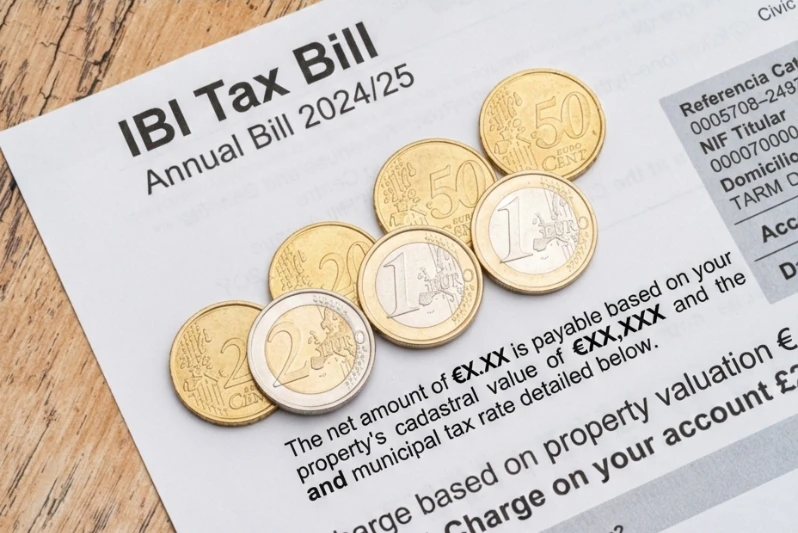
Owning property in Spain comes with annual tax responsibilities beyond filing your Modelo 210 that catch many owners off guard - particularly non-residents who manage their properties from abroad. From IBI tax to community management fees, these charges arrive whether you're living in the property or not.
This guide covers every major local tax in Spain, explains when and how to pay, and clarifies how they connect to your Modelo 210 non-resident tax obligations.
What Are Local Taxes in Spain?
Local taxes in Spain are collected and managed at a municipal level by your local authority (ayuntamiento) or its delegated collection agency (SUMA, Patronato de Recaudación, ATIB..) depending on the region. They fund everyday services - street cleaning, public lighting, road maintenance, waste collection - essentially covering the infrastructure and upkeep of your local area. Whoever is listed as the official property owner is responsible for paying them - resident or not.
Think of it like Council Tax in the UK, Grundsteuer in Germany, or Taxe d'habitation in France.
The Main Types of Local Taxes in Spain:
All of the following local taxes are paid directly to your local Town Hall (ayuntamiento) or to its delegated tax collection agency (this varies by area). In some provinces, the bill may be issued/collected by a local public collection agency (for example, SUMA in Alicante province).
IBI
Also known as “Impuesto sobre Bienes Inmuebles” is Spain’s annual municipal property tax, and the one most owners will encounter first. It applies to all immovable property - homes, land, garages, and warehouses - and applied to both residents and non-residents.
IBI tax is allocated to funding the local infrastructure and services such as cleaning and maintenance of streets and parks, public street lighting, and in some cases it also includes rubbish collection fees. IBI tax also contributes to the funding of other crucial public services like education and healthcare in your municipality. It’s calculated based on your property's cadastral value, and the rate is set by your municipality. It doesn't change based on whether the property is occupied or generating income.
When to pay: Typically between April and November, though exact dates vary by municipality. Even if you don't receive a bill, you are still legally obligated to pay.
Rubbish Collection Fee (Tasa de Basura)
This fee is attributed to waste collection and disposal services. While some municipalities include it within the IBI bill, others issue it as a separate charge. Amounts vary considerably - from as little as €50 to over €200 per year - depending on the size of the property and the local authority. This tax also applies to both residents and non-residents, and applies regardless of how much time is spent in the property.
IVTM (Impuesto sobre Vehiculos de Traccion Mecanica)
If you own a vehicle registered in Spain, you must pay the IVTM annually. It applies to cars, motorbikes, vans, and other vehicles, and is calculated based on engine power. This is similar to the UK's Vehicle Excise Duty (road tax) or the German Kraftfahrzeugsteuer. If the vehicle is not registered in Spain and is only in Spain temporarily, IVTM usually won’t apply; if it becomes effectively based and registered in Spain, it can.
Municipal Capital Gains Tax on Land (Plusvalia Municipal)
This one-time tax applies when you sell, inherit, or donate a property in Spain. It is calculated on the increase in land value (not the building itself) based on the cadastral value, the number of years of ownership, and the local rate. It’s important to note that this is separate from capital gains tax on property sales, which is declared via Modelo 210 and subject to a 3% withholding at the point of sale.
Community Fees (Gastos de Comunidad)
Technically speaking community fees are not a type of tax, but are effectively mandatory for owners in apartment blocks, urbanisations, or gated developments. These fees cover maintenance of shared spaces - gardens, pools, lifts, hallways, security - and are regulated under Spanish law. They can be paid monthly, quarterly or annually, with costs ranging from hundreds to thousands of euros. Failure to pay can result in legal action and may complicate or block a future property sale, as well as affect other legal procedures linked to that property.
Payment options
Non-residents have several options for paying their local taxes in Spain:
- Direct Debit: From a Spanish or a SEPA bank account
- Online payment via the municipal websites: Some town halls/agencies allow card payments or other methods without holding a Spanish account; others do require Spanish/SEPA accounts. Requirements vary by municipality/collection agency.
- Bank Transfer: From your home country's bank, though conversion fees may apply directly by your bank
- In person: At your local town hall (ayuntamiento), designated banks, or official collection offices
- Through a gestor: You can appoint a gestor in Spain to handle all your local tax payments, though fees can be hefty.
- Through IberianTax: Pay via our platform and the team handles everything on your behalf, fully online and at an affordable one-time price. You can even automate your payment so it's taken care of every year without hassle.
For non-residents, IberianTax is the simplest, most cost-effective solution - no trips to the Town Hall, no language barriers, no missed deadlines.
Consequences of Not Paying - or Paying Late
Ignoring local tax bills in Spain can have serious consequences that escalate quickly:
- Surcharges and interest: Unpaid taxes are subject to late payment surcharges of between 5% and 20% depending on how overdue the payment is, plus interest.
- Embargo proceedings: The Spanish tax collection system (Recaudación) can initiate enforcement proceedings (embargo) against your bank account or property, even if you are a non-resident, acquiring funds directly from your bank account or even auctioning your property to recover unpaid tax amounts.
- Property sale complications: Outstanding tax debts (including unpaid IBI and community fees) are attached to the property and can negatively impact the sale process. A notary will check for debts before completing any transaction.
The good news is that these situations are entirely avoidable - and with the right help, staying compliant doesn’t have to be complicated.
IBI Tax and the Modelo 210: How Are they Linked?
Beyond local taxes, non-resident property owners in Spain have another major and separate obligation with the Spanish Tax Office (Agencia Tributaria): they must file an annual Modelo 210 form. Whether you rent out your Spanish property, use it personally or it just sits vacant, you are still required to file the Modelo 210 annually.
The connection to local taxes is important: the cadastral value used for your IBI bill is the exact same figure used to calculate your Modelo 210 liability. This means knowing and keeping track of your IBI bill is not just a local tax matter - it directly feeds into your annual non-resident tax obligation.
A Smarter, More Affordable Way to Stay Compliant
Gestors and tax advisers can be costly. IberianTax offers a fully online, professional alternative at a fraction of the price. File your Modelo 210 accurately and on-time for as little as €34.95 per filing, and automate your IBI and local tax payments entirely with a single one-time fee.
No stress. No missed deadlines. No overpaying.
Create your free IberianTax account today and take control of your non-resident Spanish property tax obligations for good.